
Check Lehi Voter Registration
The official Vote.Utah.gov voter search is a personal status tool, not a public directory that permits browsing by name. A Lehi voter supplies a full set of identity and address details so the system can find the intended registration. That design helps prevent two residents with similar names from being treated as the same person. JavaScript must be enabled for the form to submit.
| Lookup field | Input | Needed | How to enter it |
|---|---|---|---|
| First Name | Text | Yes | Use the voter’s legal first name. |
| Last Name | Text | Yes | Use the legal surname on the registration. |
| Date of Birth | Date | Yes | The browser or site controls the date format. |
| Street Address | Text | Yes | Enter the registration residence street. |
| City | Text | Yes | Enter Lehi for a Lehi registration. |
| ZIP | Text or number | Yes | Use the registration address ZIP code. |
Submit all six fields together. A failed match is not proof that someone never registered. A spelling difference, a recent move, an old ZIP code, or an update still being processed may cause the result. Check the entered details, then use the state’s update route or contact Utah County Elections when the record still looks wrong.
The official lookup page shows the six-field Lehi voter form before any personal details are entered.
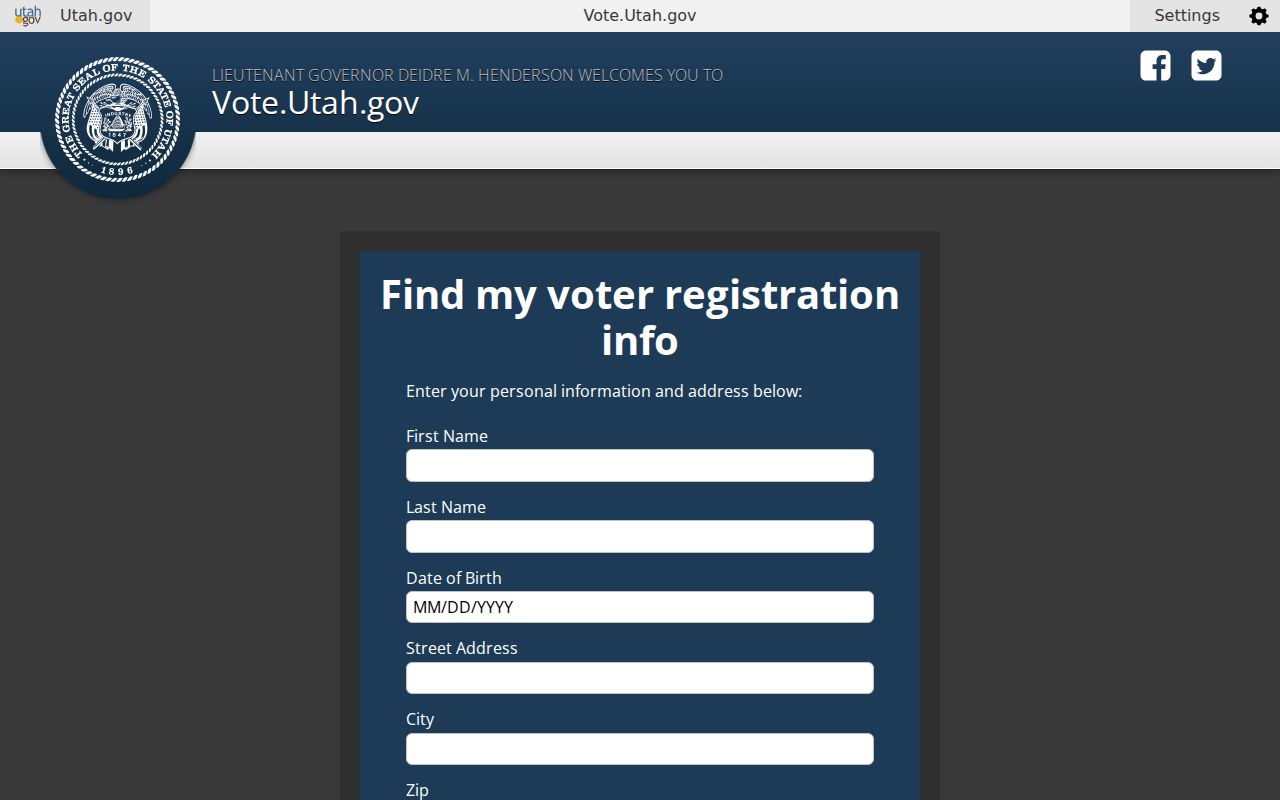
Its field layout makes the tool’s narrow purpose clear: verifying one voter’s record and election information, not searching a public name list.
Read a Lehi Voter Match
A successful match is meant to confirm registration status and supply polling or election information tied to that voter. It does not turn the personalized tool into a downloadable voter roll. Keep the result in context. Status can change after an address update, and polling details can vary by election.
If an address has changed, start at the official Utah voter services hub and update the registration. A Lehi mailing address alone can also be misleading near city boundaries. The county administers the voter record according to the actual residence and precinct, so use the complete street address and ZIP code.
What if the record is missing? Recheck the legal name, birth date, and current registration address. If those facts are right, Utah County Elections can confirm whether an update, inactive status, or jurisdiction issue explains the miss.
Note: The personal lookup confirms a match; it does not authorize testing another person’s identity details or bypassing protected-record rules.
Lehi Voter Records Public Fields
Utah law defines a public portion of the voter database. Utah Code sections 20A-2-104 and 20A-2-607 govern registration data and access. The public fields can help distinguish residents with similar names, confirm political-party status, or trace civic participation. They never show how a person marked a ballot.
| Legal name | Identifies the registered voter. |
|---|---|
| Physical address | Shows the residence unless an at-risk protection applies. |
| Mailing address | May differ from the physical address. |
| Year of birth | Public products use the year, not the full birth date. |
| Party status | Shows party affiliation or unaffiliated status. |
| Voting history | Lists elections in which the voter took part, not ballot choices. |
| District facts | May identify county, precinct, and maintained legislative or local districts. |
| Registration facts | May include status and registration, effective, or update dates. |
Some election products also carry a voter identification number and ballot processing dates, subject to the product’s rules. Those fields do not change the core limit: public participation history records whether a ballot was cast in an election, not the votes selected.
Private Lehi Voter Record Details
The full voter database contains more than its public output. Driver-license or state-ID data, Social Security data, signatures, full dates of birth, and some contact details are not ordinary public-list fields. Utah also provides an at-risk classification for qualifying voters. Distributed data must not expose a protected voter’s identity and address in the usual way.
Confidential under Utah law. Full birth dates, identity numbers, signatures, and at-risk voter information are withheld under Utah’s voter-data and private-record rules, including Utah Code §§20A-2-104, 20A-2-607, and 63G-2-302.
Safe at Home, Utah’s Address Confidentiality Program, offers a substitute address and mail forwarding for qualified participants. It is distinct from the voter at-risk process, though both can limit public address exposure. Neither program gives a requester grounds to demand the hidden information. A protected voter should work with the county clerk or the relevant state program to apply or correct the classification.
Compare Lehi Voter Data Products
Utah offers several election-data products, and each answers a different question. A personal status lookup is free and narrow. The statewide file is a large paid data set. Ballot-sent reports cover a limited set of elections, while precinct results show totals rather than people.
| Product | Cost stated | What it provides | Main limit |
|---|---|---|---|
| Personal voter lookup | Free | Status and polling information for a matched voter | Requires all six identity and address fields |
| Statewide voter file | $1,050 | Tab-delimited registration data | Certification, privacy, and use rules apply |
| Ballot-sent report | $35 per election | Daily ballot order and processing facts for covered elections | Not offered for municipal odd-year elections or after the election |
| Precinct results | No fee | Aggregate election returns | No individual voters or ballot choices |
The price gap is striking, but it reflects different products rather than free and paid versions of the same search. Choose the smallest official product that answers the lawful civic or research need.
Note: Fees, product terms, and timing notices can change, so confirm them on the live state data page before ordering.
Request Utah’s Lehi Voter File
The Lieutenant Governor’s voter and election data request is the official route for the full statewide product. Lehi registrations appear within that state file rather than as a separate city download. The state lists a one-time $1,050 purchase price, no refund, no subscription, and no free update. Delivery is tab-delimited. Common spreadsheet software may not display the entire file because of its size.
- Select the statewide voter-registration product on the official request route and provide requester or organization contact details.
- Complete the statutory qualification or intended-use certification and acknowledge the privacy and distribution limits shown by the live form.
- Submit payment and a delivery email, then plan to open the tab-delimited file with software that can handle its size.
A time-sensitive notice can affect what arrives. In 2026, the state said current information would not be supplied until May 25 and that earlier requests would use a March 8 snapshot. That was a dated constraint, not a permanent calendar rule. Read the current notice each time.
The state voter data request page shows Lehi voter records as part of a structured product with price, format, and confidentiality terms.
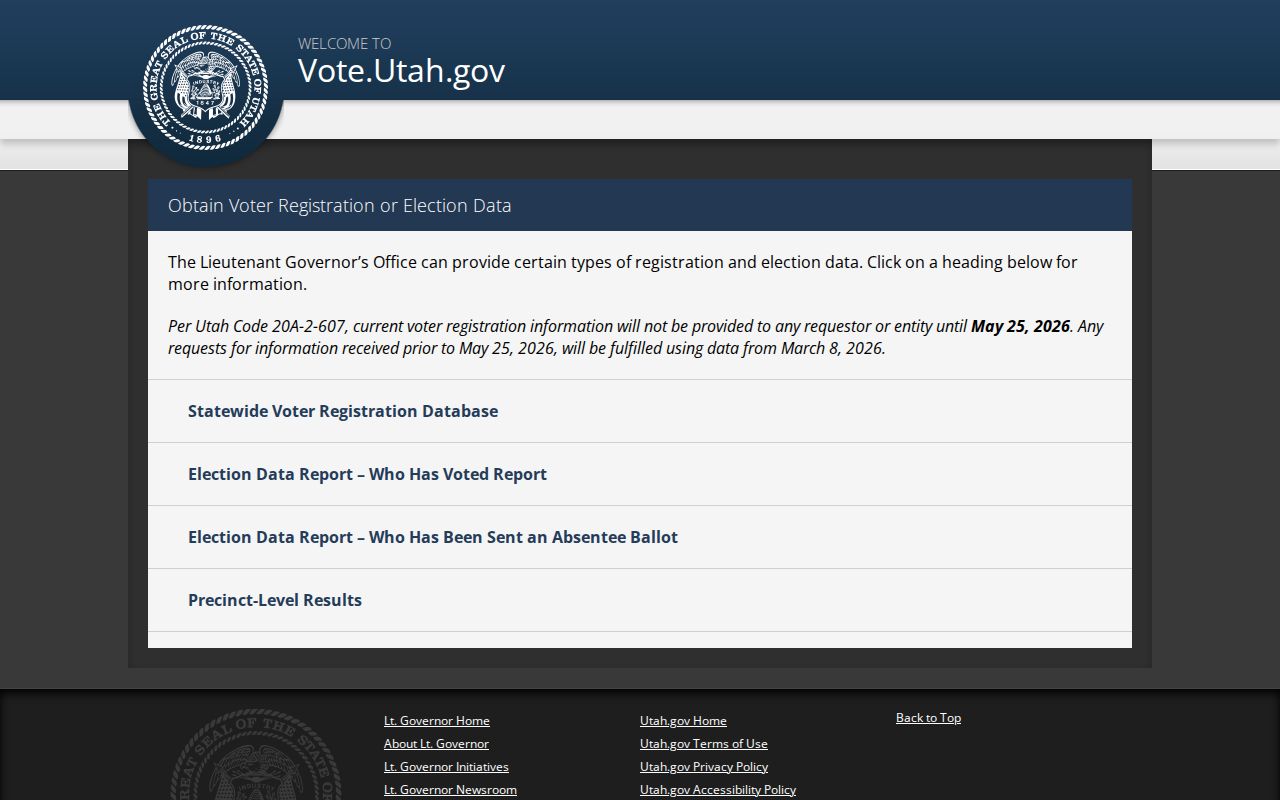
That voter-file screenshot reinforces why the current state page, rather than an old saved form, should control any purchase or timing decision.
Lehi Voter History Is Not Votes
Voting history is easy to misread. It records participation in an election, never the choices marked on a secret ballot. The same distinction applies to the ballot-sent report. That report may contain a voter ID, legal name, full residence, county, precinct or congressional district, ballot order and processing dates, and party status. It does not reveal selections.
Utah limits the $35 report to regular even-year primary and general elections. It is unavailable for municipal odd-year elections or after the election. When available, it is emailed each day from 21 days before Election Day through the day before. Private records are left out, and at-risk information is supplied without exposing the protected person’s identity.
Precinct-level results are the proper source for vote totals. Those free aggregate returns show how an area voted, but they cannot connect a ballot choice to a named Lehi resident.
Utah County Voter Help for Lehi
Utah County Elections is Lehi’s local registration office. The office handles registration, precinct maps, local election administration, ballot questions, and county election records. It is in Provo because Provo, not Lehi, is the county seat. That split matters when the state lookup cannot resolve an address or status problem.
Utah County Elections
100 East Center Street, Suite 3100
Provo, UT 84606
801-851-VOTE (8683)
Call or use the office route for a personal correction, a precinct question, or a lookup mismatch. Written county records not offered through a published tool can move through county Records Management and GRAMA. The broader law is covered with the other Lehi public records request paths.
The official Utah agency directory gives a second contact route when an election question belongs with another state office.
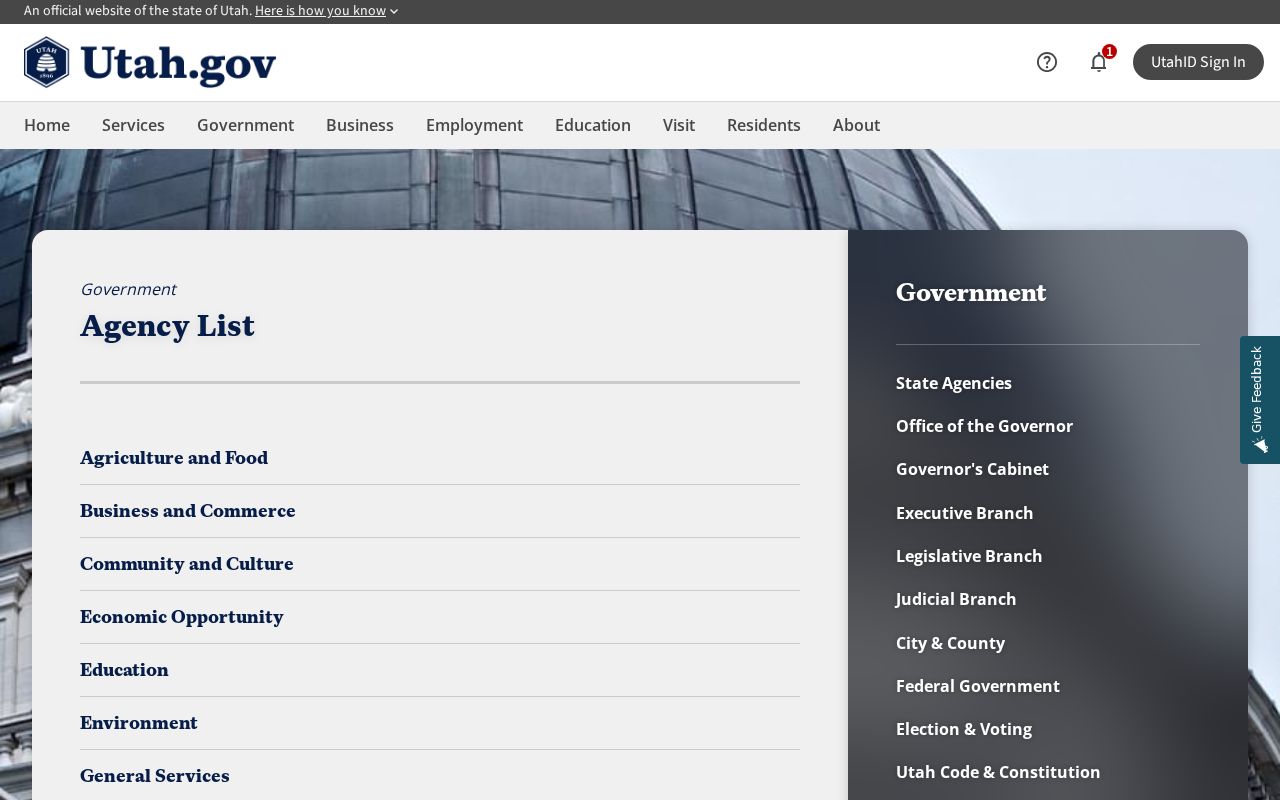
That directory is a fallback for finding the responsible agency, while Utah County Elections remains the first local contact for Lehi registration details.
Lehi Voter Roll Status Changes
Registration records can move among current, inactive, and cancelled states as election officials process address changes, duplicate records, death notices, and other statutory events. Felony or incompetency rules may apply in circumstances set by law. A missing recent voting event does not by itself prove cancellation.
Federal National Voter Registration Act safeguards generally require notice and waiting steps instead of cancellation solely because a voter did not vote. For a personal fix, update the record through Vote.Utah.gov or contact Utah County Elections. Do not try to infer a person’s full history from a single status label.
Use voter data lawfully. Utah limits access and redistribution through election statutes and requester certification. False claims cannot unlock protected data, and voter records must never be used to stalk or harass anyone.
Utah’s stalking and harassment laws can carry criminal or civil consequences based on the conduct. Report suspected voter-data misuse or protected-voter exposure to election officials. Contact local law enforcement when the conduct presents a threat.
Note: A registration status is a current administrative fact, not a full account of a person’s moves, identity, or civic life.
Historical Lehi Voter Records
Older voter work follows a different trail. Utah State Archives research guides and Utah County clerk series may identify poll lists, registration material, canvasses, returns, and election abstracts. Coverage is series-specific. No official online inventory reviewed for the research established one complete run of Lehi poll-book years, so a catalog search or archivist inquiry should precede any assumption about survival.
Poll lists can place a person in a civic setting at a certain address and time. Canvasses and returns document election administration and totals. Neither source exposes a marked ballot. Utah County was formed in 1850, but that jurisdiction date does not prove every election series begins then or remains intact.
Lehi’s formal street naming and address system dates to 1890. For earlier names, combine any surviving election material with land descriptions, wards, neighbors, census schedules, and local newspapers. Later records are easier to pair with a numbered Lehi address, but the city and county still must be confirmed.