
Lehi Open Records at a Glance
Lehi sits inside a three-level records system. The city keeps municipal administration, permits, business-license registrations, cemetery files, and police reports. Utah County offices in Provo keep deeds, parcels, tax facts, marriage licenses, elections material, and county archives. Utah agencies supply statewide court dockets, vital certificates, corrections data, licenses, business entities, and historical series. The right custodian depends on who created the item, not where the person named in it lives.
| Lehi record group | Office holding it | Online route | Practical access |
|---|---|---|---|
| Deeds, liens, plats | Utah County Recorder | Land Records, with mode-specific coverage | Free index and images; counter copies and certification |
| Parcels, appraisal, tax | Recorder, Assessor, Treasurer | Land Records parcel tools | Free portal; office or GRAMA fallback |
| Marriage licenses | Utah County Clerk | Full-name license search | Free index; Clerk copy route |
| City permits and licenses | Lehi City department | No complete citywide index found | Department contact or written GRAMA request |
| Court cases | Utah Courts and filing clerk | XChange, based on court and case type | Docket search; terminal or clerk for the file |
| Birth and death | Utah DHHS or local health office | Historic archives after closure periods | Recent copies require eligibility and ID |
| Voter registration | Lieutenant Governor and Utah County Clerk | Personal lookup and regulated data products | See the Lehi voter registration record rules |
| Jail and offender data | County Sheriff or Utah Corrections | Custody and registry searches | Free lookup; agency request for other records |
| Professional and business status | Utah DOPL and Corporations | State license and entity searches | Free basic lookups; ordered products may cost |
Utah's Government Records Access and Management Act, or GRAMA, presumes access to public material but also labels some files private, controlled, or protected. Juvenile and adoption files, sealed or expunged cases, protected victim details, recent vital certificates, and specified personal identifiers do not become open because a requester knows a name. An index may be open even when the image or certified copy has stricter rules.
Lehi Recorder Records Have Many Doors
The Utah County Land Records portal is not a single search box. It separates owner name, property address, serial number, subdivision, appraisal, value, map, abstract, document name, entry, book and page, kind of instrument, image, mining, water-rights, and delinquent-tax routes. A blank owner result therefore does not end the search. Another mode may hold the same transaction under an entity, co-owner, old serial number, or instrument type.
The entry form is especially exact. An entry number must be paired with its year, or the user may search by a recording date in month, day, and year format. Search and Reset controls complete the form. The portal gives no one beginning year for every mode. It separately links REDI images from 1976 and 1977, typed abstracts, abstract-book scans, plats, and other historic groups, so coverage must be read by collection.
| Recorder field | Input | How it works |
|---|---|---|
| Entry Number | Number | Use with Year |
| Year | Number | Recording year paired with entry |
| Recording Date | MM/DD/YYYY | Alternative exact-date route |
| Search | Button | Runs the selected query |
| Reset | Button | Clears the fields |
This split design is useful once its logic is clear. Indexed results can connect parties, their roles, the kind of instrument, recording date, parcel serial number, legal description, and an image or book-page path. The Recorder supplies ordinary or certified copies and gives phone or email guidance. Staff do not perform a title search, interpret legal papers, or give a legal description by telephone.
Note: The Recorder's free online library is a source for documents and images, not a substitute for a professional title examination.
Lehi Property Records Need Context
A parcel record combines several offices' work. The Recorder connects deeds, liens, plats, abstracts, maps, and serial history. The Assessor supplies appraisal and valuation facts. The Treasurer maintains tax history, notices, and delinquency information. These are related records, not interchangeable proof. A deed records a transfer, the appraisal describes the assessed parcel, and the tax roll shows billing and payment facts.
Owner name, situs address, and owner mailing address can differ. Situs means the parcel's physical location. The mailing address is where tax correspondence goes, which may help reach an owner but does not prove that person lives there. Trusts, business entities, co-owners, and stale mailing data add more room for error. Serial History and Serial Versions are the best bridge when a parcel has split or its identifier has changed.
Insider tip. Compare the Lehi situs, owner mailing address, serial history, deed image, and parcel map before treating two similar names as the same person.
Lehi Public Records Offices
Lehi is not the county seat, so many in-person searches require a Provo office. City records begin with the citywide coordinator or the department that made the file. County deeds go to the Recorder. County marriage and election material goes to the Clerk. A court file belongs to the court where it was filed. Calling first can confirm the custodian, current counter service, and any retrieval or certification cost.
Lehi City GRAMA Coordinator
153 North 100 East
Lehi, UT 84043
385-201-1000
twilson@lehi-ut.gov
Utah County Recorder
Utah County offices
Provo, Utah
801-851-8179
recorder@utahcounty.gov
Utah County Clerk
111 South University Avenue
Provo, UT 84601
801-851-8109
Marriage, passports, archives
Lehi Justice Court
154 North Center Street
Lehi, UT 84043
385-201-1090
Qualifying local case files
The Lehi City department directory helps route a request to the unit most likely to hold it.
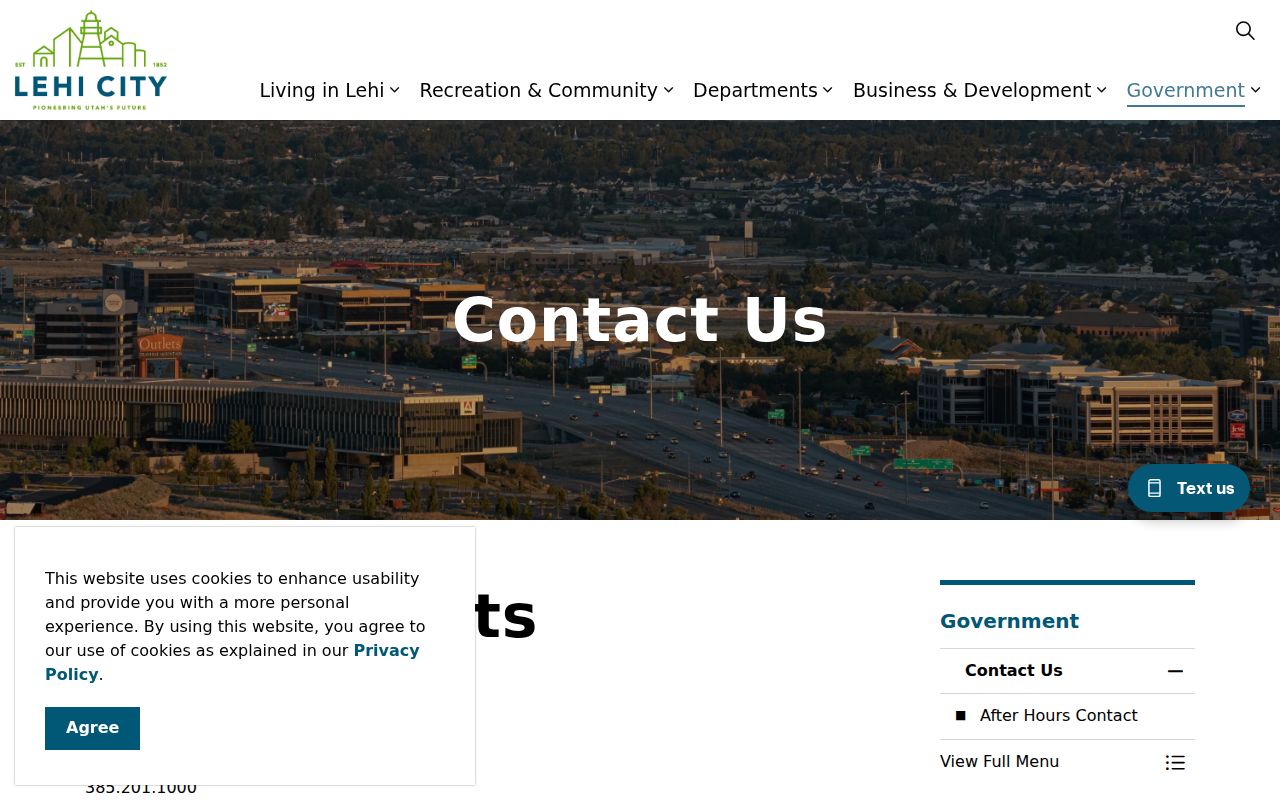
The directory exposes direct paths for administration, building and permitting, cemetery, library, Justice Court, and other city services instead of forcing every request through one desk. For county material, the Utah County Clerk service page shows contact routes for elections, marriage licenses, passports, and records management.
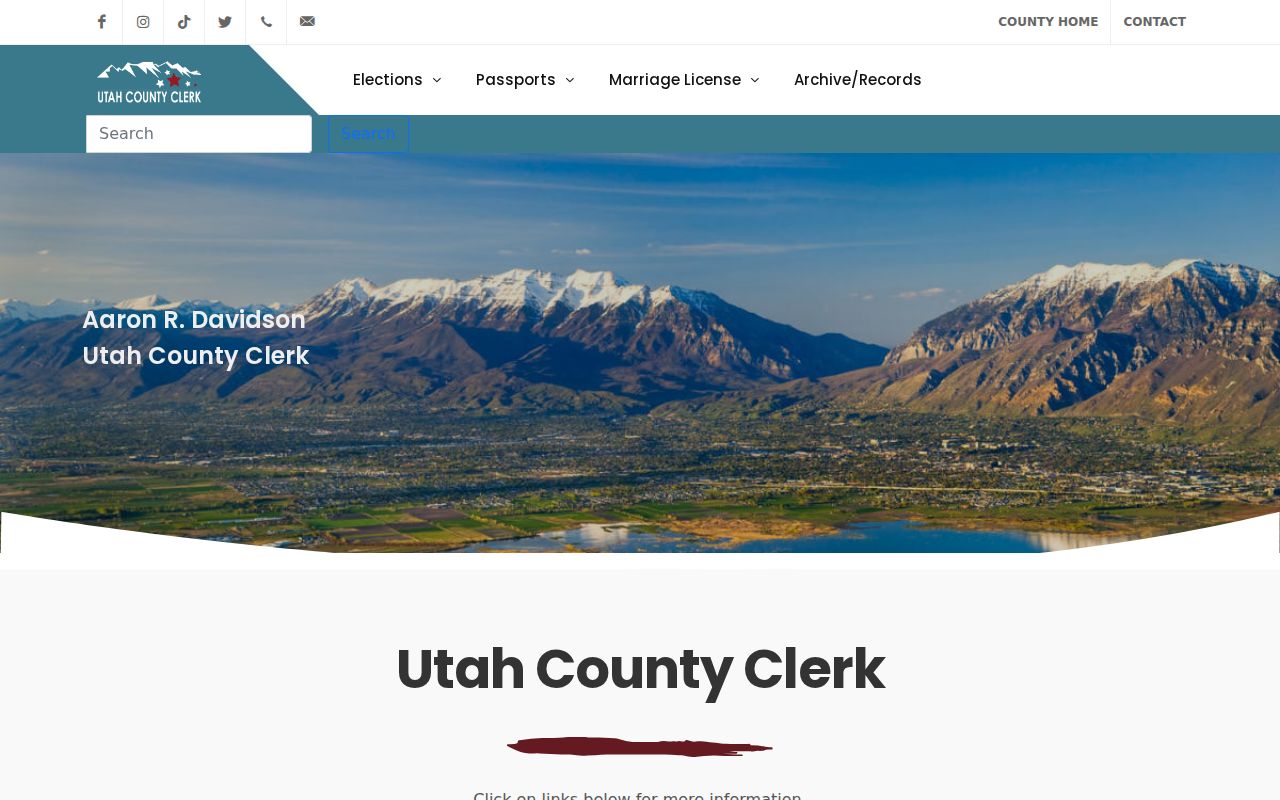
That county page matters because the Clerk is not the general trial-court clerk. Court documents still come from the court that owns the case.
Lehi Court Records Beyond Dockets
Utah Courts XChange supplies statewide district and justice court case information within its stated scope. A party-name result may show case number, court, case type, filing date, party roles, counsel, events, hearings, judgments, and disposition. Coverage varies by court and case type, and the official material does not state one universal start date.
Does a public docket mean every filing is online? No. A docket is an event list, not a promise that each pleading, exhibit, minute, or order can be downloaded. Use its case number to contact Lehi Justice Court or the filing court. Ask for the exact public document, audio, or certification needed. A courthouse terminal may allow broader inspection than an unauthenticated web view, while older files may need off-site retrieval.
MyCase is for eligible parties viewing their own cases after identity steps. It is not an open name directory. Juvenile, adoption, sealed, expunged, and protected personal material remains restricted. Federal District of Utah and bankruptcy cases use PACER and the federal clerk, not XChange.
- Docket
- The dated list of filings and events in a case.
- Index
- A finding aid that points to a record but may not contain its full image.
- Certified copy
- An office copy authenticated by the custodian for formal use.
- Custodian
- The government office responsible for keeping and answering for a record.
- Exemption
- A legal rule that permits or requires material to be withheld.
Note: A court name hit is not a complete criminal history and may omit nonfiled events, restricted cases, or matters in other courts.
Lehi Marriage and Vital Records
The Utah County marriage-license search accepts a full name. A failed result can mean another county issued the license, so spelling variants and surname changes should be checked before asking the Utah Office of Vital Records and Statistics. The county license record and a state marriage abstract answer different questions. A historic application may carry ages, residences, parents, and dates, while the state abstract is a brief certified vital-record product.
Birth certificates become public archival records after 100 years and death certificates after 50 years under Utah Code section 26B-8-125 and Archives practice. Recent certificates require a qualifying relationship or legal basis, identification, and payment. Utah DHHS and participating local health offices offer state, local, online, and mail ordering routes. Divorce is also split: the court holds the docket, pleadings, and decree, while state Vital Records issues an abstract.
The Utah vital-record fee page publishes the live certificate charges and special services.
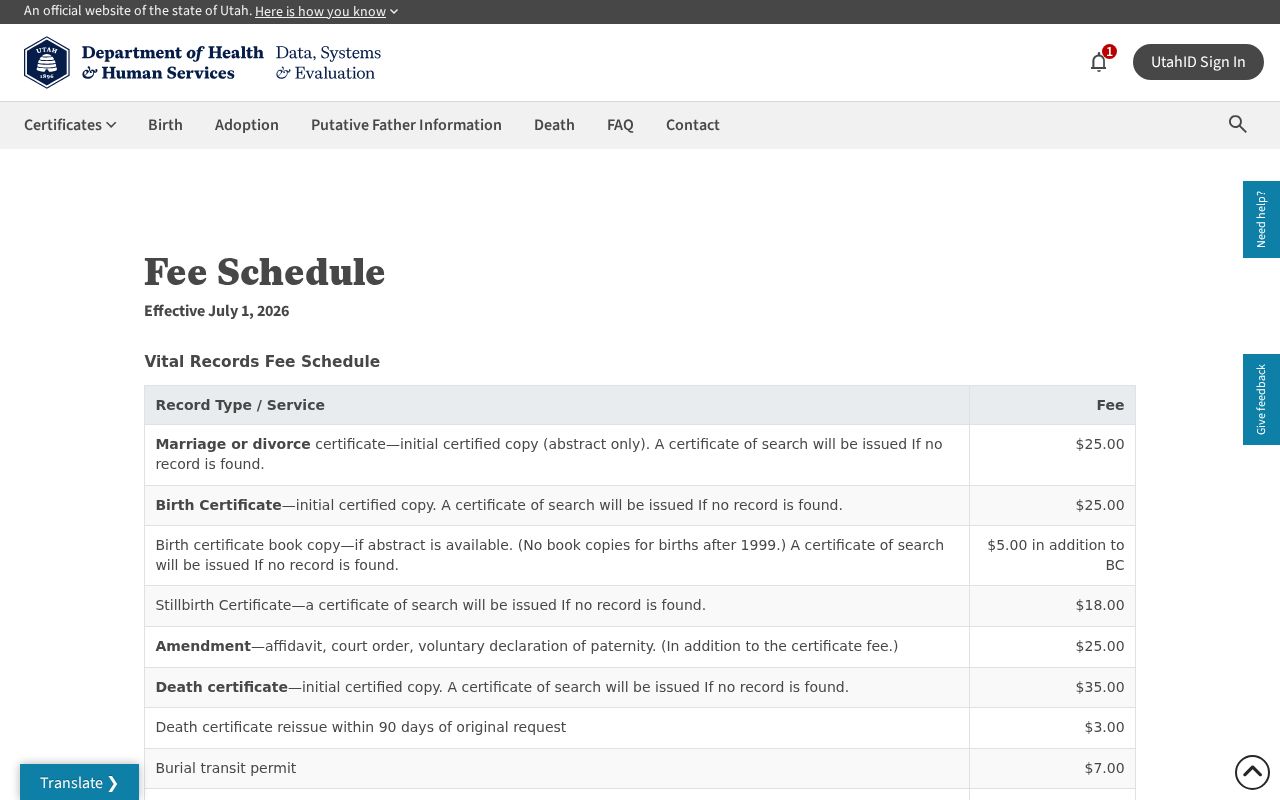
The official schedule is essential when an order is time-sensitive because the state changed its initial fees in 2026 and returns applications with insufficient payment.
Lehi Record Fees Can Shift
State vital fees effective July 1, 2026 list an initial birth certificate at $25, death at $35, and marriage or divorce abstract at $25. The office reported about six weeks for mail and online orders in June 2026. These notices can change, so the live order page should control. Local in-person issuance may be worth checking when a certificate cannot wait.
Other fees depend on the service. Recorder web viewing and images are advertised as free, but certification and recording can cost money under the current schedule. Lehi Police lists $25 for one record or 25 cents per page, whichever is greater, plus stated charges for color photo printouts, storage media, and actual media-redaction labor. Court searches, copies, and certifications may also carry charges.
GRAMA permits reasonable duplication and qualifying compilation costs under adopted policy. Inspection is free, and an office may not charge simply to review a record to decide if it is public. Ask for an estimate before costly compilation work. A fee waiver may apply when disclosure mainly benefits the public or directly affects an indigent requester's legal rights.
Lehi Custody and Police Records
The Utah County inmate search is the local custody route. A listing may include booking name and number, booking date, current custody status, charge, arresting agency, bond, court, and release facts when published. It is a snapshot, not proof of conviction. The Utah Department of Corrections offender search covers the state population within its own scope, while federal custody requires the federal locator.
Lehi Police incident, accident, and other agency records use the Police records form and GRAMA classification. Victims or parties may have access routes a general requester does not. Ongoing investigations, protected victim information, juvenile material, medical facts, and security-sensitive details can be withheld or redacted. The form lets the agency approve, deny, redirect, invoke extraordinary circumstances, or classify the material under other law.
Lawful use. Use Lehi records only for a lawful personal or civic purpose. Utah law and registry warnings prohibit using record details to stalk, harass, threaten, or harm anyone.
Lehi Public Record Classifications
Public is only one GRAMA class. Private records concern personal interests for which disclosure is restricted. Controlled records can include medical or psychological material whose release may harm the subject. Protected records cover interests such as investigations, security, procurement, and government deliberation when the statute applies. An office may release the open part of a file while redacting the rest.
Separate laws create separate limits. The federal Driver's Privacy Protection Act restricts motor-vehicle personal data. Utah's Safe at Home program can provide a substitute address and mail forwarding to qualified participants. At-risk voter and certain public-safety protections can suppress identity or property details. These programs do not erase historical records that were already lawfully public, and a generic records demand cannot override them.
A denial should identify the record, cite its legal basis, and state appeal rights. Partial release can be valid when only a Social Security number, bank detail, protected address, medical fact, or other exempt field must be removed. Requesters should ask whether a redacted version can be supplied rather than assuming that one closed field closes the whole document.
Requesting Lehi Public Records
Every person, not just a Utah resident, may request an open government record. GRAMA calls for a response as soon as reasonably possible and ordinarily within ten business days. The shorter five-business-day track applies when release benefits the public rather than mainly the requester. Extraordinary circumstances may extend either period. A precise request is easier to search, price, and answer.
- Choose the custodian. Send city administration, permits, licenses, cemetery, or police material to Lehi. Send land and marriage material to the proper Utah County office. Send a court request to the filing court.
- Check the published access route. Search the official index first, but note whether it shows a full image, a docket, or only a pointer to an office file.
- Describe the record. Give names, date range, address, parcel serial, case or entry number, document type, and preferred electronic format when known.
- Submit and save proof. Use the office form, portal, email, mail, or counter route. Keep the sent form and confirmation.
- Review cost and response. Ask for an estimate or eligible waiver, pay authorized copy charges, and read any redaction or denial citation.
The city form accepts requester contact details, a specific description, inspection or copy choice, delivery preference, waiver grounds when used, and signature. It may be sent to the Lehi City GRAMA Coordinator at 153 North 100 East, Lehi, UT 84043, by the published city route, or handled at the office. Police requests use the dedicated form. County administrative records outside the Recorder, Clerk, tax, election, or court systems go through Utah County Records Management and its county GRAMA route.
Appealing a Lehi Records Denial
A GRAMA denial is not just a refusal. It must describe the denied record or portion, state the legal authority, and explain the appeal path. A requester generally appeals to the chief administrative officer within 30 days. After the entity's final action, Utah law provides routes through the State Records Committee and district court under Utah Code sections 63G-2-401 through 404.
Read the response before appealing. The office may have redirected a request because another custodian holds the file, invoked a valid delay, requested clarification, or released part with lawful redactions. Narrowing a broad date span or naming the right department may solve the issue faster. Keep the original request, proof of submission, fee notice, response, citations, and appeal deadline together.
Lehi Archives Beyond Online Records
When a current portal stops, move to the office counter, telephone or email guidance, written GRAMA request, courthouse terminal, library, or archive catalog. Utah County Recorder can supply copies and help identify its collections. The filing court can retrieve an actual case file. Utah County Records Management preserves department series. Lehi City Library offers computers, copy service, and print or digital research access, though its exact historic directory holdings were not confirmed.
The Utah State Archives research guides organize court, vital, cemetery, land, city, and county series by creating agency and date range.
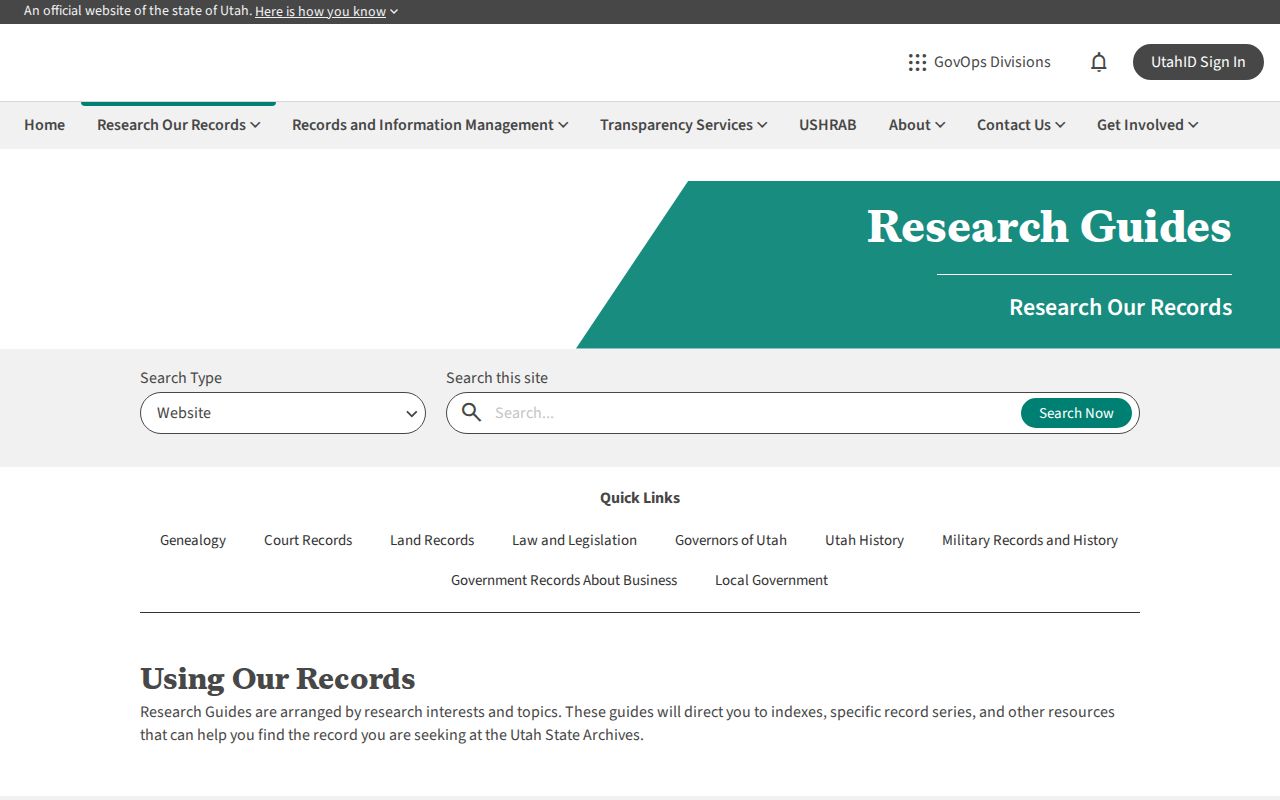
Those inventories are the sound way to find older Lehi material because each record series has its own survival, access, and digitization history. The Utah County Vital Records collection includes county-clerk material from before statewide birth and death certification. FamilySearch catalog entries and physical archives can then fill gaps that no modern name box reaches.