
Start a Lehi People Search
Choose the first record by the fact already known. A full name works well in Utah County's owner roll, recorded document index, court party index, state license lookup, and business registry. An address points first to the parcel record. A case number belongs with the court clerk. For a person from an earlier generation, an obituary, cemetery entry, census page, or probate docket may be more useful than a current web directory.
Lehi is not the Utah County seat. City records stay with Lehi, while deeds, marriage licenses, elections, and tax records are mainly kept in Provo. State agencies hold court indexes, professional credentials, entity filings, and vital certificates. That split matters. Sending a request to the office that created the record saves time and reduces the risk of treating two people with the same name as one.
- Search the Utah County land portal by owner name or property address, then note the parcel serial number.
- Check Utah court dockets by party name and narrow the result by court, case type, and date.
- Compare a second source, such as a deed, license, business filing, obituary, or cemetery record.
- Ask the named custodian for the underlying file or certified copy when an index hit is not enough.
- Move to the library, Archives, or FamilySearch catalog when the needed year is not online.
A phone number or email address is less likely to appear in an official land or court index. Use it to verify a lead, then anchor the identity in a source with a named keeper. For a common surname, compare middle names, spouse or co-owner names, dates, and the type of transaction. A parcel owned by a trust or company may require a second step through the deed or business filing before an individual appears.
Lehi People Records Custodians
Three local routes handle much of a Lehi people search. The Utah County Recorder maintains deeds, liens, plats, abstracts, maps, and ownership links. The Utah County Clerk handles marriage licenses, elections, and county archives. Lehi City's recorder coordinates city requests for permits, licenses, council material, and municipal administration. Detailed classifications, fees, and request steps belong with the Lehi public records system.
Utah County Clerk
111 South University Avenue
Provo, UT 84601
801-851-8109
The Utah Government Records Access and Management Act, commonly called GRAMA, permits a written request when no public index exists. Inspection of a public record is free, though copies and qualifying compilation work may carry charges.
The correct office also depends on the event. Lehi City keeps its council, permit, license, police, and cemetery files. Utah County keeps the land and marriage systems. A state court keeps a Fourth District case even when the parties live in Lehi. Give the custodian a name, date range, address, parcel, case, or document number and ask for a preferred electronic format. Broad demands are harder to identify and may cost more to compile.
Lehi Land Search Has Layers
The Utah County Land Records menu is more than an owner-name box. Separate paths search names, addresses, serial numbers, subdivisions, appraisal facts, values, taxes, maps, recorded documents, abstracts, kinds of instrument, and images. If one name mode produces no result, try a parcel, entry, or abstract path before deciding the record is absent.
The portal screenshot shows those distinct search families together.
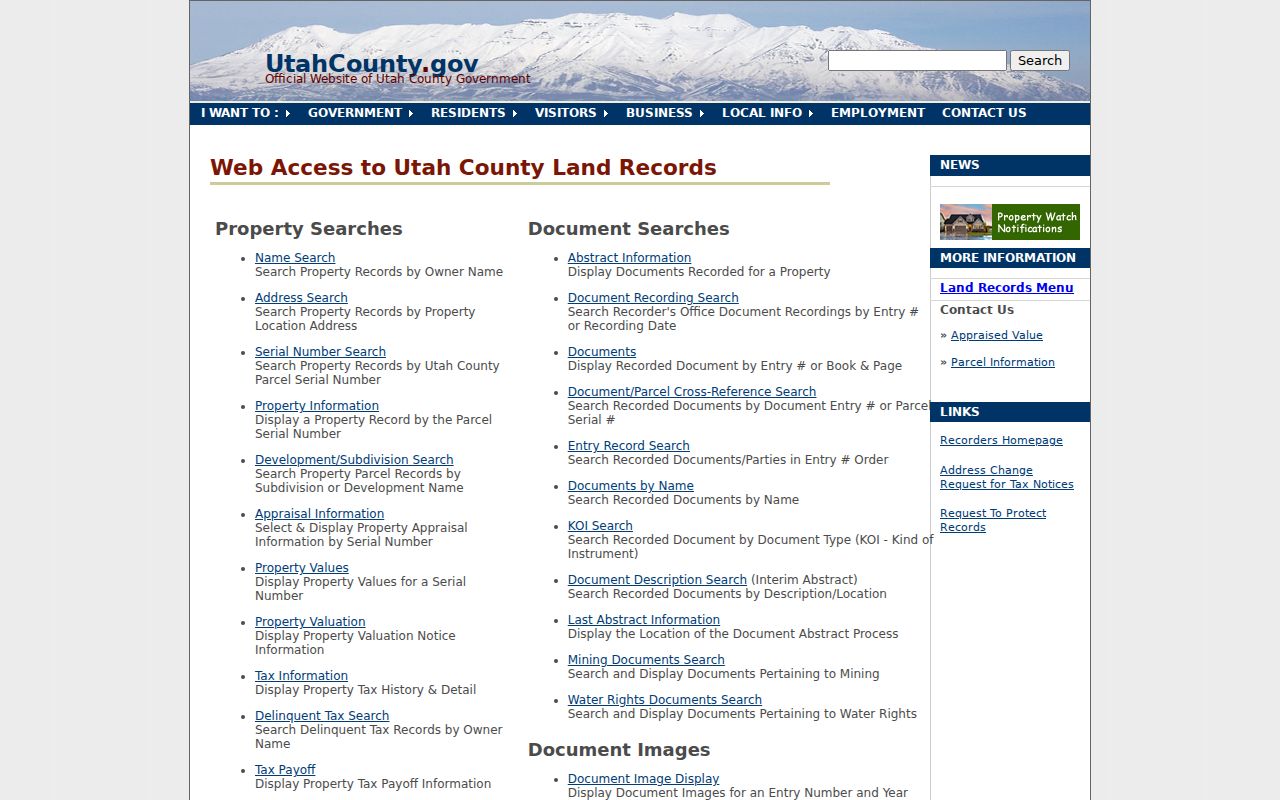
That menu lets a searcher pivot from a person to land, then from the land to deeds and former owners. The Recorder also provides older typed abstract books, plat images, mining and water records, and a separate REDI segment for 1976 and 1977. No single start year applies to every mode.
- Parcel
- The county database unit for a piece of land.
- Situs
- The physical property location, which may differ from the owner's mailing address.
- Grantor and grantee
- The party giving and the party receiving an interest in a recorded instrument.
- Abstract
- A condensed chain of recorded activity tied to land.
Search Lehi Recorder Entry Fields
A known document number or recording date offers a precise way into the Recorder's records. The Entry Record Search pairs an entry number with its year, or accepts an exact recording date. It is useful after a parcel abstract, deed reference, tax file, or court paper supplies one of those facts.
| Search control | How to use it | Format |
|---|---|---|
| Entry Number | Pair with the recording year | Number |
| Year | Identifies the entry's recording year | Number |
| Recording Date | Alternative to entry and year | MM/DD/YYYY |
| Search / Reset | Run or clear the chosen route | Buttons |
The live form makes the narrow choice clear.
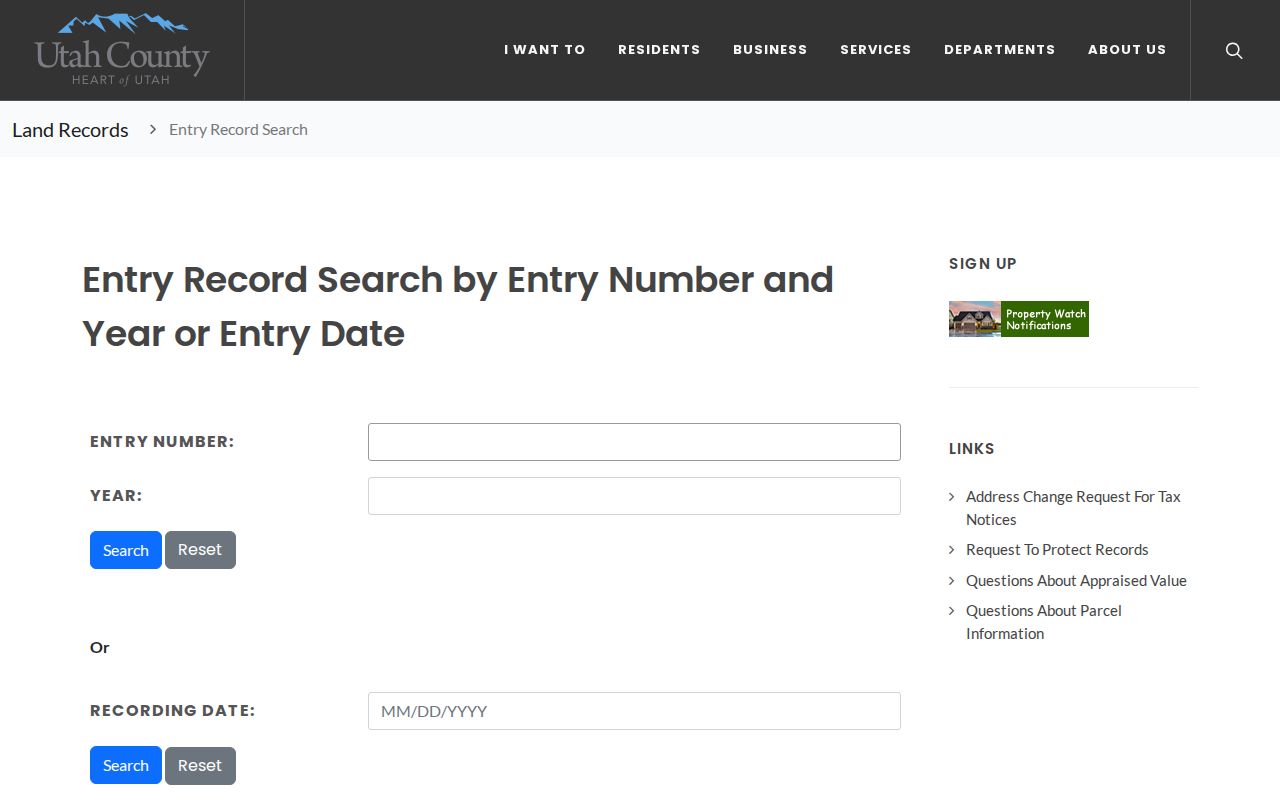
A returned index item may show the document number, date, instrument kind, parties and roles, parcel or legal description, and an image route. The indexed line is a lead. Ask the Recorder for an ordinary or certified copy when the actual instrument matters.
Trace Lehi Court Record Names
Utah XChange covers public case information from district and justice courts within its stated scope. A Lehi name may appear in the city Justice Court or the Fourth Judicial District. Search by party name, then narrow by court, case type, and date. A docket can show the case number, party roles, counsel, events, hearings, judgments, and disposition where public.
The official XChange access page explains statewide account choices.
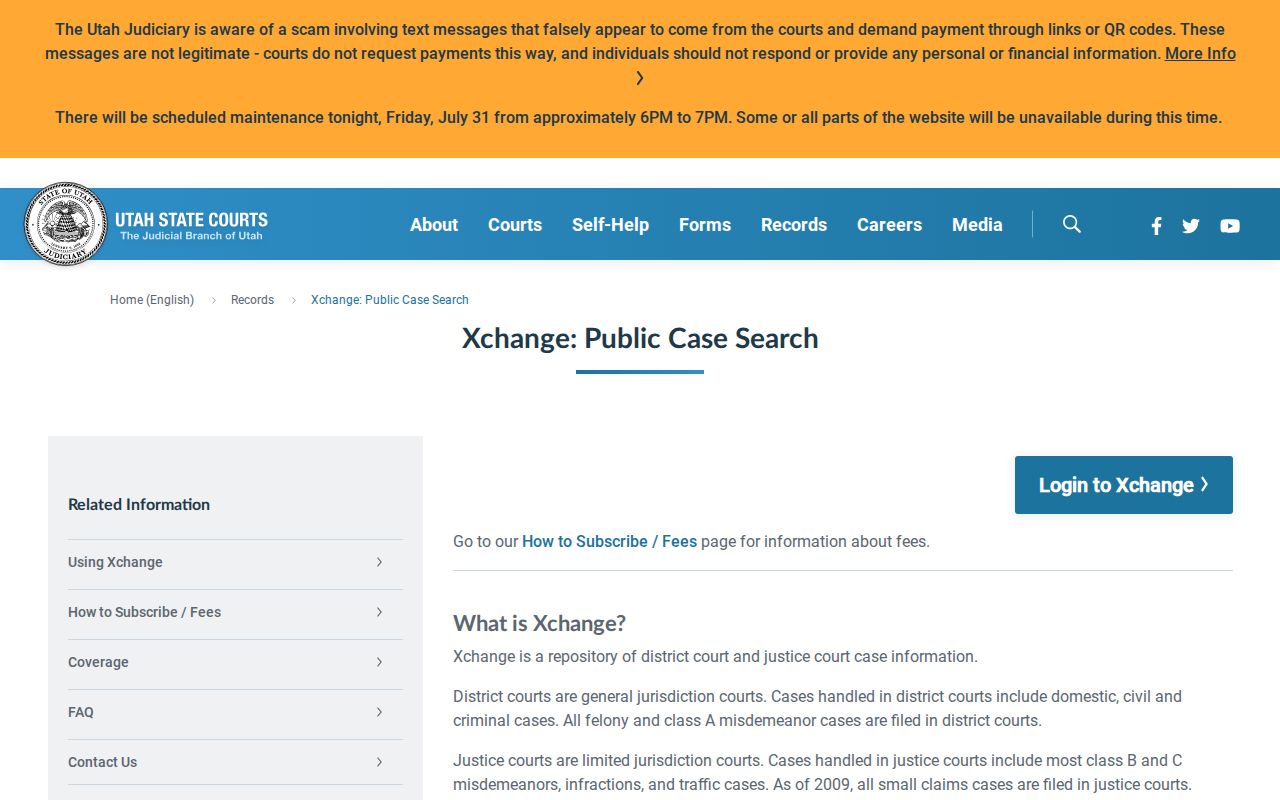
A docket hit does not make every pleading available. Use the case number to ask the filing court for the docket, order, exhibit, audio, or certified copy. Courthouse terminals may offer inspection beyond a public landing page. Juvenile, adoption, sealed, expunged, and protected material remains restricted.
| Record route | Scope | Best next step |
|---|---|---|
| Lehi Justice Court | Qualifying local cases | XChange, then the clerk at 154 North Center Street |
| Fourth District Court | Utah County district and probate matters | XChange, terminal, or clerk copy request |
| Utah appellate courts | Appeals and opinions | Appellate record and opinion tools |
| Federal courts | District and bankruptcy cases | PACER or the federal clerk |
Lehi Vital Records Routes
Utah's Office of Vital Records and Statistics issues birth and death certificates plus marriage and divorce abstracts. Utah County also provides local vital certificate service. Current birth and death records are not open name lists. A qualified applicant must show identity and the relationship or legal authority required by statute.
The state order page shows certificate and local-office choices.
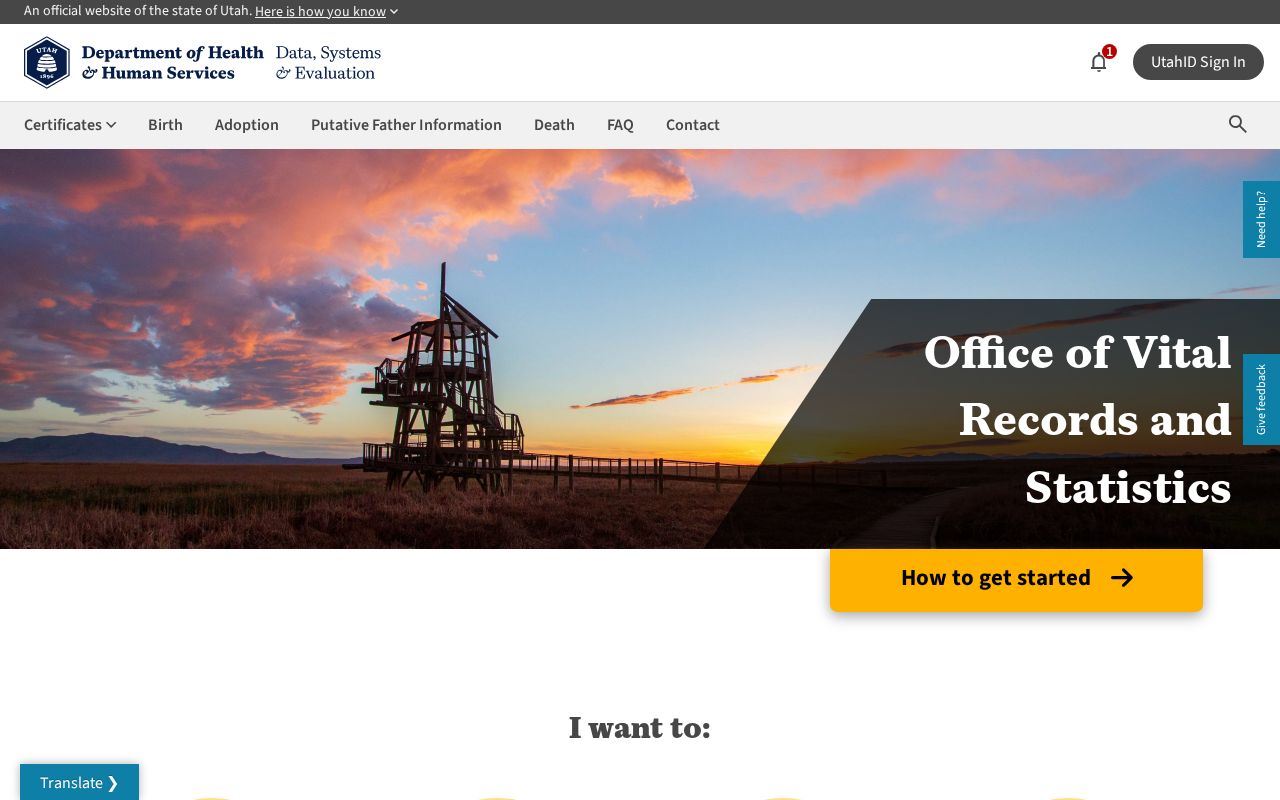
Marriage takes two paths. The Utah County Clerk offers a free full-name license search for licenses issued by that county, while the state supplies an abstract. Divorce also splits between a court decree and a state abstract. For genealogy, birth records become public after 100 years and death records after 50 years. Utah State Archives holds older county-clerk material and series-specific indexes.
Fees changed on July 1, 2026. The state lists initial fees of $25 for birth, $35 for death, and $25 for a marriage or divorce abstract. In June 2026, it also reported about six weeks for mail and online processing, so check current notices and local in-person options.
Check Lehi Licenses and Agents
Two state searches help distinguish a person's professional role from a business connection. The DOPL License Lookup can show a licensee's name, profession, credential number, status, issue and expiration dates, and official actions when published. The Utah Business Entity Search can show an entity's legal name, standing, type, registration number, filing dates, agent, addresses, and filing routes.
The license screen supports an individual credential check.
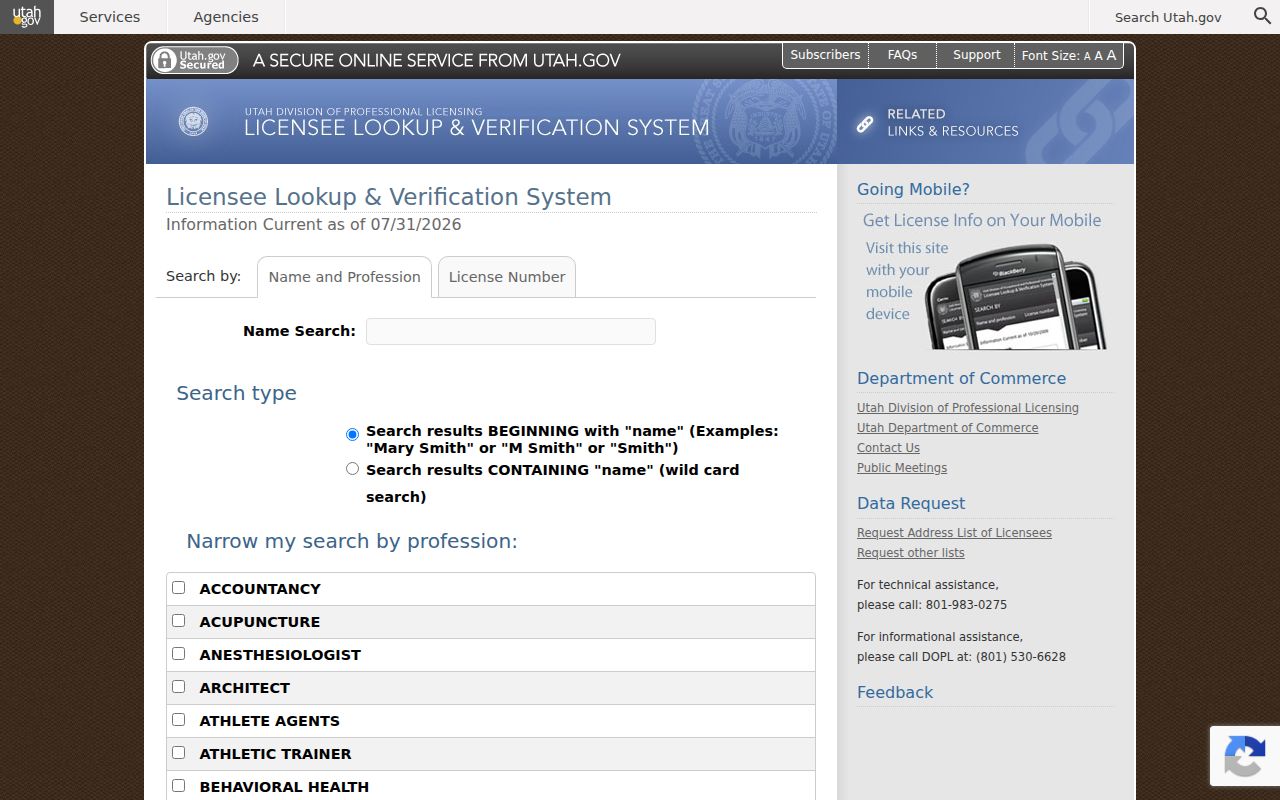
A registered agent accepts formal papers and may not own the business. Compare an entity result with Lehi business-license records when ownership or a local operating address is the issue. The city has no complete public license search in the research, so a targeted GRAMA request is the documented fallback.
The state entity screen gives a separate name and registration route.
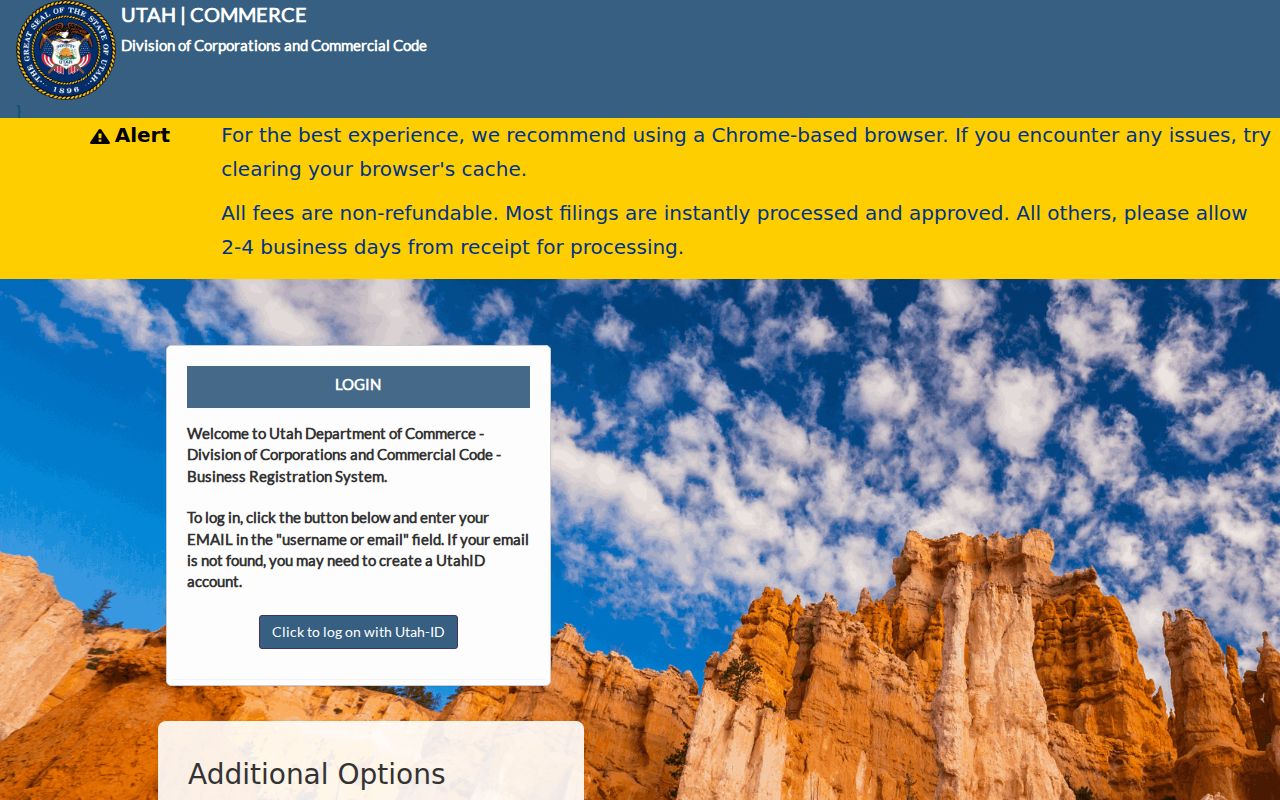
Using both systems prevents a common error: treating a service agent, credential holder, and company owner as the same role without support.
Follow Lehi Addresses Through 1890
Lehi's official timeline says streets were named and addresses were created in 1890. That date changes how an old resident should be traced. Later numeric grid addresses can be tested in parcel, deed, census, directory, permit, and newspaper records. Earlier descriptions may rely on lots, farms, wards, neighbors, roads, or legal land descriptions.
The modern grid still needs care. Utah's coordinate pattern repeats similar numbers in different cities. Add Lehi, the ZIP code, and Utah County, then verify city limits in GIS. A postal Lehi address near a boundary does not by itself prove Lehi City holds the police, permit, or utility file. Parcel splits and annexations can also change serial numbers and jurisdiction.
For an older address, identify the land first. Use the parcel's serial history, plat, and abstract to bridge current and former descriptions. Then compare the names with census schedules, newspapers, cemetery records, school material, and probate. That sequence respects what each source can prove.
Owner and occupant are not synonyms. A tax mailing address can belong to a trustee, company, or owner who lives elsewhere. The situs is the land itself. A deed records an interest rather than a daily residence. To identify who actually lived at a Lehi address, combine ownership records with a census, reverse directory, newspaper notice, school source, or other record created close to the target year.
Reconnect Through Lehi History
The Lehi City Library offers computers, Wi-Fi, copying, and print and digital collections, but its public page does not verify exact runs of city directories, reverse books, phone books, or obituary indexes. Ask the reference desk before planning a visit around a named volume. Regional catalogs at BYU, UVU, the FamilySearch Library, and Utah State Archives can fill gaps.
Utah State Archives research guides cover local government, courts, vital records, land, and cemeteries. An inventory can identify the creating agency, dates, series number, arrangement, access limits, and digitization status. Utah Digital Newspapers adds obituaries, marriage notices, school lists, land transfers, and social columns. Search initials, spelling variants, nearby Provo or American Fork papers, and surrounding pages when OCR misses a surname.
School history and yearbooks may help reconnect classmates, while probate can link a person who died to heirs and later deeds. Modern school staff pages are not alumni directories. A historical name should be checked against the institution and year in effect, especially as Alpine School District continues operating schools through June 30, 2027 while new districts organize.
Hutchings Museum can add local context through photographs, manuscripts, buildings, businesses, and institutional history, though access and reproduction rules should be confirmed before a visit. The FamilySearch catalog may identify deed, probate, marriage, church, or vital microfilm. Save the exact catalog title, film or digital group number, and access symbol. Those details separate an online image set from material limited to a signed-in user or research center.
Map Lehi Cemetery Names
Lehi City Cemetery offers an online map viewer, office help, telephone and email contact, and a deceased-person list at the entrance gazebo. The gazebo list is updated each year before Memorial Day. A call or office inquiry may catch a recent change that has not reached that annual print list.
Cemetery evidence can connect a name to a grave, burial date, interment group, and nearby family cluster. Adjoining graves are leads, not automatic proof of kinship. Compare them with an obituary, death certificate, probate file, and church or family source. Utah Archives also warns that many burial books lack a statewide name index, so a known cemetery and approximate date can be more useful than a blind surname search.
Lehi Cemetery's mix of map, gazebo, phone, email, and counter access is rare. It gives both an online route and a human fallback when spelling, recent burial, or plot detail causes trouble.
Compare Lehi Search Sources
Official indexes state where a fact came from and point toward a custodian. Commercial compilation tools may combine public and purchased data, but records can be stale, omit their source, or merge people who share a name. Use a compilation as a lead only. Confirm the result in at least two records tied to Lehi, Utah County, or Utah.
| Source | Strength | Limit |
|---|---|---|
| Official parcel or deed index | Named custodian and document trail | Owner may not be the occupant |
| Court docket | Case number, roles, events, disposition | Not every filing is public or online |
| License or entity filing | Credential or business role | Agent does not always mean owner |
| Commercial compilation | Broad lead gathering | May merge identities or lack provenance |
Lawful personal use. Public names and addresses must not be used to stalk, harass, threaten, or harm anyone. Protected records do not become open merely because a name is known.
When Lehi Search Portals Stop
No-result screens need context. Utah County's land system has separate search modes and no one stated online start year. XChange varies by court and case type. A marriage search can fail because another county issued the license. A voter-status search requires all identity and address fields. Historic cemetery and court series may be described in an archive catalog without a public name index.
Move through the fallback chain. First, vary spelling, initials, dates, parcel identifiers, and jurisdiction. Next, contact the Recorder, clerk, court, cemetery, library, or Archives. Ask for the exact record type and date range, not a broad search for everything about a person. If no published tool exists, send a focused GRAMA request to the office that created the file.
Keep the index citation, document number, case number, parcel serial, archive series, and response from the custodian. Those details make later checks faster and show whether the source is an index, an image, an ordinary copy, or a certified record. They also make it easier to correct a common-name mistake before it spreads.
Note: A public index identifies a possible record; only the responsible custodian can provide or certify the underlying file.